 Issue 120
 Issue 119
 Issue 118
 Issue 117
 Issue 116
 Issue 115
 Issue 114
 Issue 113
 Issue 112
 Issue 111
 Issue 110
 Issue 109
 Issue 108
 Issue 107
 Issue 106
 Issue 105
 Issue 104
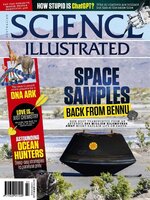 Issue 103
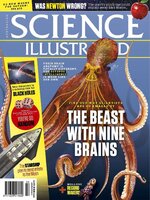 Issue 102
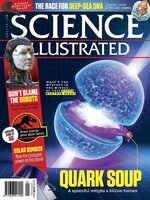 Issue 101
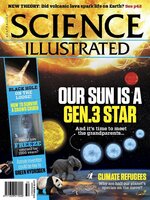 Issue 100
 Issue 99
 Issue 98
 Issue 97
Science Illustrated delivers natural science, break through discoveries and an understanding of the world for the entire family. Packed with stunning photography and in-depth editorial it’s a visually spectacular gateway to the world looking into the beginning of life to distant objects in the universe.
SUBSCRIBE TODAY FOR YOUR CHANCE TO WIN the trip of a lifetime
Science Illustrated
Radio show: Milky Way revealed in new detail
Small-scale recycling: springtail exudes goodness
Harbin skull reveals Denisovan face • A new examination of a 200,000-year-old skull has isolated DNA, proving that this is the first known skull from a Denisovan. Can it tell us what these mysterious hominins looked like?
Dead 1960s satellite sends a radio burst • Australian researchers pick up a radio burst from a forgotten NASA satellite after 60 years of silence. Researchers are trying to find a rational explanation.
Signals flowing through Antarctica remain a mystery • The original explanation for two mysterious signals that emerged from Earth in 2006 and 2014 has been proven wrong. So the cause is back to being unknown.
Squid dominated the Cretacean oceans • A new scanning method has revealed 40 previously unknown squid species that roamed the oceans 66-145 million years ago.
Virus in 4 billion people found to reshape our DNA • Herpes simplex virus type 1 – the cold sore virus – changes your DNA to its own advantage. We now know how it does this, so can researchers stop it?
Facial recognition pits AI networks against human ‘super-recognisers’ • It is the quality of information gathered, not the quantity, which marks out those good at remembering faces, find researchers at UNSW in Sydney.
Is Earth’s speed changing? • Earth is orbiting the Sun and also spinning on its own axis, but is all this motion constant, or does it change over time?
Is it safe to exercise if you’re sick? • “Does exercise help me recover when I’m sick, or make illnesses worse?”
TEST YOURSELF
Why do electric vehicles have heat pumps? • EVs with heat pumps can have a 10-15% longer range than cars with conventional electric radiators, because heat pumps are more efficient.
“If I drink soup, does it come out as urine or faeces?”
How long did individual dinosaurs live? • “I know that some dinosaurs grew to be 10 times larger than a modern elephant. Does that mean they lived longer – or shorter?”
How did Mars get its moons? • Mars has two moons. Did they form in the same way as our own Moon, or were other forces at play?
Clementines and mandarins: what’s the difference?
Can you get sucked into quicksand? • “I’ve seen films like the last Indiana Jones movie, where people get caught and even swallowed by quicksand. What is quicksand, and is it really that dangerous?”
What is astigmatism? • “How and why does astigmatism originate, and what does it have to do with the mutation that causes blue eyes?”
What’s the difference between a sea and an ocean? Are there seven seas? • “I have heard that the Indian Ocean qualifies as one of the ‘Seven Seas’ of the world, but then why is it not called the Indian Sea? What’s the difference between a sea and an ocean anyway?”
BRINGING THEM BACK • A US-based company claims to have done the unimaginable, recreating an extinct species for the first time. But the groundbreaking technology is controversial – and the next project even more sensational.
Wolf resurrection adds traits from the original • Researchers at Colossal have edited a number of genes in modern wolves to make new wolves that resemble the extinct dire wolf. Three physical traits formed the main focus for the genetic changes.
Gene scissors create a new type of wolf • To create their dire...